Visual Scheduling System & Work Order Workflow Redesign
Client Type: Manufacturing facility with multi-department production workflow
Overview
This manufacturing site struggled with a chaotic work order system—drawings and job packets were dropped into an unorganized pile on the shop floor. Supervisors had to abandon their stations, dig through stacks, and manually guess priorities based on fragmented communication from office staff. This created production delays, misalignment across departments, and inconsistent throughput.
Challenge
The disorganization caused major inefficiencies:
No visibility into job sequence, lead times, or priority
Frequent disruptions as supervisors searched for the correct work orders
Unclear expectations from management
Lost or damaged paperwork
Production bottlenecks and mismatched timelines across departments
With multiple departments operating on different lead times, keeping work synchronized was nearly impossible. The floor needed structure, clarity, and a future-focused view of incoming work.
Solution
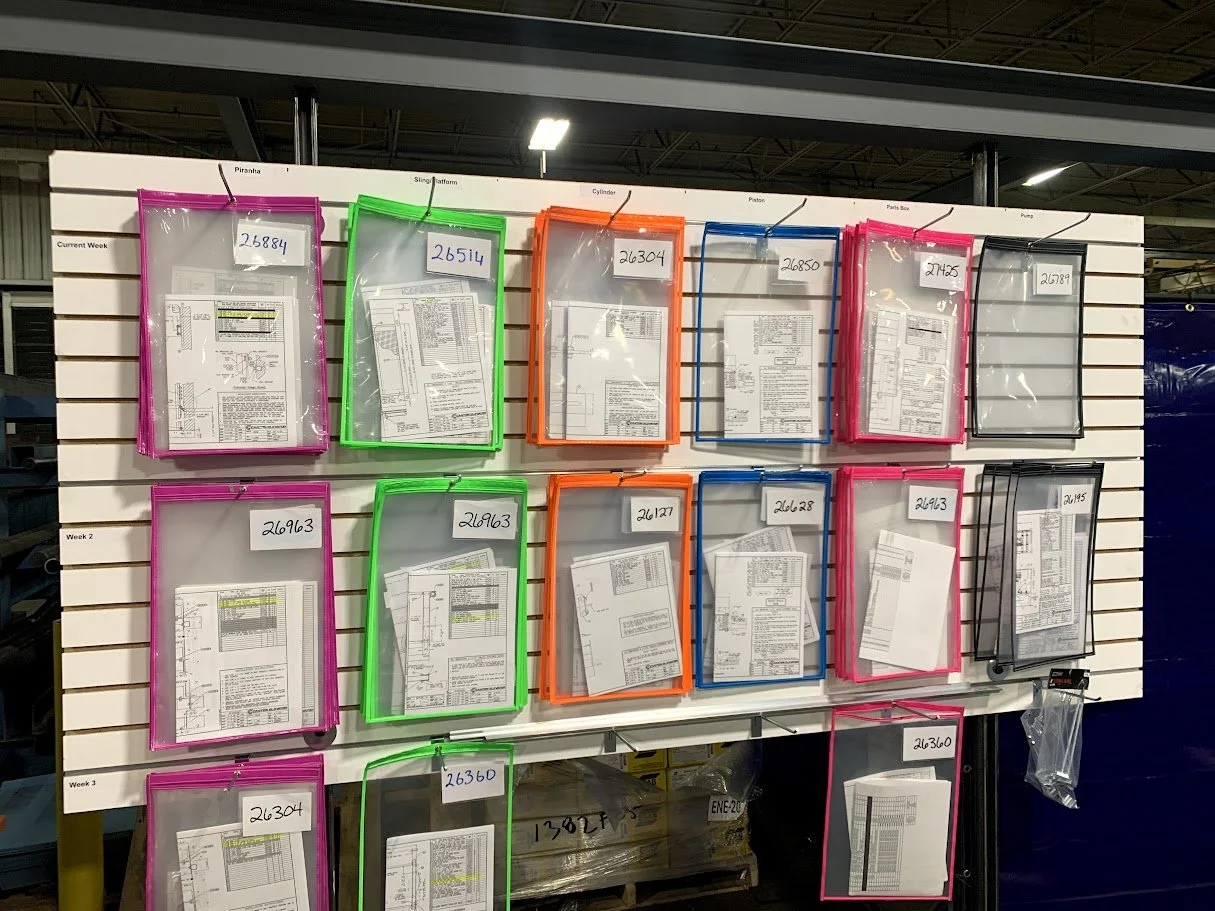
T2P2 Solutions redesigned the entire scheduling and work order process using lean visual management principles—creating the color-coded scheduling wall shown in the reference photo.
Key improvements included:
Color-coded folders by department, providing instant visual recognition
Central slatwall scheduling board, accessible to all supervisors
Three weeks of work orders displayed at all times, ensuring every department could work ahead according to its specific lead time
Time-based sections—Current Week, Week 2, Week 3—to maintain flow and predictability
Priority sequencing from most urgent to least
Build numbers labeled clearly on each packet for quick identification
Job packets bundled with all drawings, BOMs, and instructions
Daily, structured schedule distribution from the Production Manager
Unified workflow, allowing all departments to complete their steps in sync so projects were fully assembled and ready to ship at the same time
This visual and strategic system replaced the chaotic pile with a clear, efficient, and reliable production planning model.
Outcome
The new scheduling system had an immediate and measurable impact:
15% increase in overall production output
Significant reduction in wasted time searching for or sorting work orders
Improved alignment between departments, thanks to the three-week visibility buffer
Faster and more accurate communication between management and supervisors
Reduced errors and missing paperwork due to standardized, color-coded packets
Better sequencing of work, ensuring departments completed tasks in sync
Higher supervisor satisfaction and smoother daily workflows
This transformation created a sustainable, organized, and forward-looking system that helped the facility operate with greater accuracy, speed, and confidence—ultimately improving on-time delivery and customer satisfaction.